Active learning for kids: why answering out loud changes everything
Children remember what they have to explain. Here is why a single spoken question can turn twenty minutes of video into something that actually sticks — and how to try it tonight.
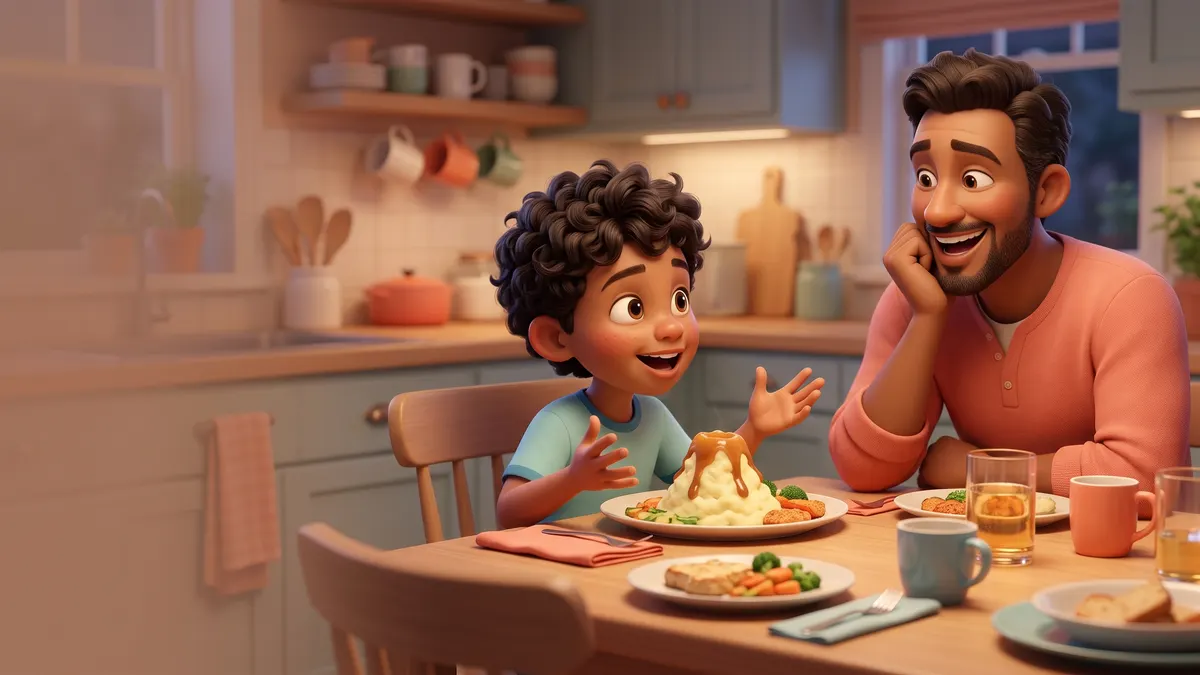
You have probably run the experiment already. Your child watches a twenty-minute video about volcanoes, seems completely absorbed, and then over dinner you ask what it was about. You get a shrug, or “lava,” or a confident retelling of something that was never in the video at all.
That is not a failure of attention. It is what watching does. Video is a very good delivery system and a very poor storage system, because nothing in the experience ever asks the child to do anything with what just arrived.
The difference is retrieval
There is a well-studied gap between recognising information and retrieving it. Recognition feels like learning: the child nods along, the explanation makes sense, everything is smooth. Retrieval — pulling the idea back out of your own head without the video in front of you — is the part that feels effortful, and it is the part that builds something durable.
Researchers call it the testing effect, but that name is unhelpful for parents, because it makes it sound like a quiz. In practice, retrieval can be one question, asked at the right moment, answered out loud. The effort is the mechanism. If it feels a little bit hard, it is working.
Why out loud, specifically
Asking a child to answer by speaking does three things that a multiple-choice tap does not.
It forces them to organise the thought first. A tap can be a guess in a quarter of a second. A sentence cannot: the child has to decide what the answer is before their mouth commits to it.
It removes the writing barrier. For a six-year-old, typing an answer measures spelling and keyboard skill more than understanding. Plenty of children who can explain photosynthesis beautifully will produce three misspelled words in a text box and look like they learned nothing.
It reveals the shape of the misunderstanding. “Because the sun makes it hot” and “because the sun is closer in summer” are both wrong in the same multiple-choice slot, but as spoken sentences they tell you two completely different things about what to fix.
What to do tonight
You do not need an app to try this. Next time a video is playing, pause it once — just once — at a moment where something interesting has just been explained, and ask a question that cannot be answered with yes or no. “Why did that happen?” is almost always enough. Then wait. The silence will feel long. Let it.
Two things to hold onto while you wait. First, do not correct the first wrong answer. Ask a smaller question instead: “What did the water do just before?” A hint keeps the child thinking; a correction ends the thinking. Second, respond to the part that was right before you touch the part that was missing. Children who feel caught out stop guessing out loud, and a child who has stopped guessing out loud has stopped giving you any signal at all.
Where this fits in a normal week
Active learning does not mean turning every screen minute into school. Most families land somewhere realistic: one guided session on weekday afternoons, twenty minutes long, with plain unstructured watching left alone at the weekend. The point is not to eliminate passive video. It is to make sure that not all of it is passive.
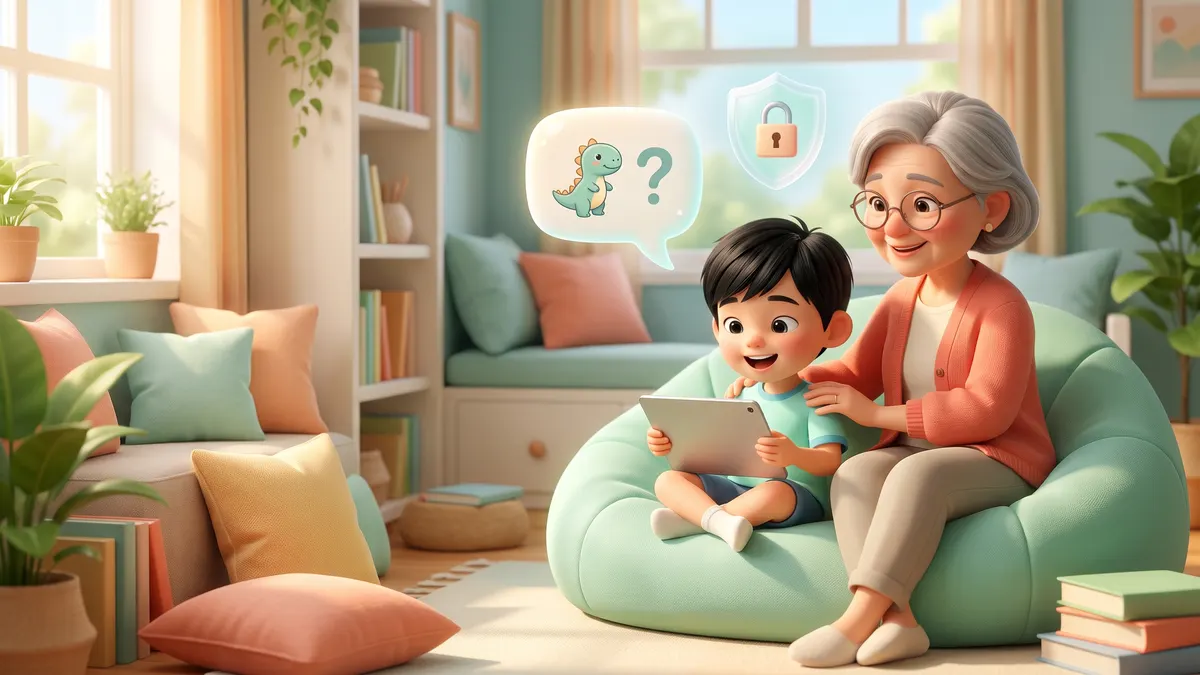
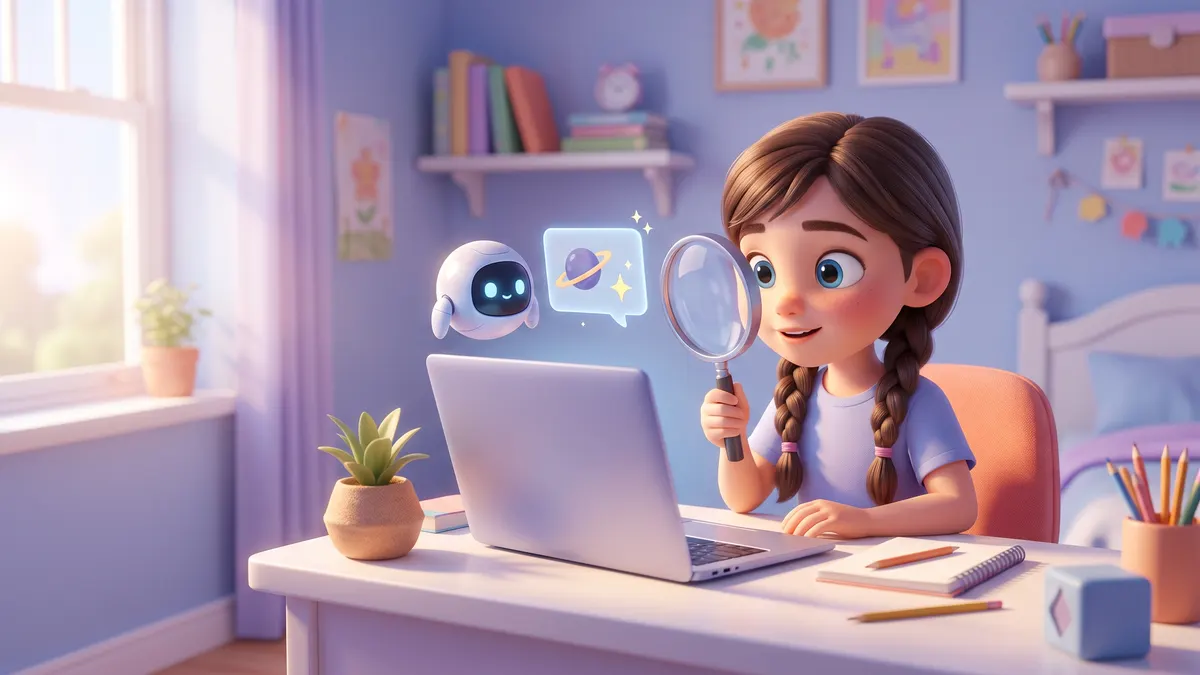
This is exactly the pattern KidseAI automates. The video pauses on its own at moments a person marked in advance, asks the question out loud, listens to the spoken answer, and responds warmly rather than scoring it. Your child gets points for thinking, and you get a short weekly summary of what they could explain and what they could not — which is, in the end, the answer to the dinner-table question you were asking anyway.